The Click2View Inbound Marketing Guide
- SHARE ON:


A guide by the Click2View Team
Inbound marketing has been around for more than a decade, but in 2026, it’s more essential, and more misunderstood than ever.
Search behaviour has changed, AI has rewritten the content landscape, and customer expectations have risen dramatically.
Yet the core truth remains: brands grow when they earn attention, not interrupt it.
This guide breaks down exactly how inbound works today, what’s changed, what hasn’t, and how any organisation big or small can turn inbound marketing into predictable, compounding growth.
What Inbound Marketing Actually Is
Inbound marketing is the practice of attracting audiences through genuinely helpful content, then converting that trust into awareness, leads, and long-term revenue.
It’s not a channel, or a campaign.
It’s a system built on:
- Understanding customer intent
- Publishing valuable answers
- Appearing where people search
- Nurturing interest instead of pushing offers
- Building long-term authority
At its simplest, inbound marketing can look like “blogging plus SEO.”
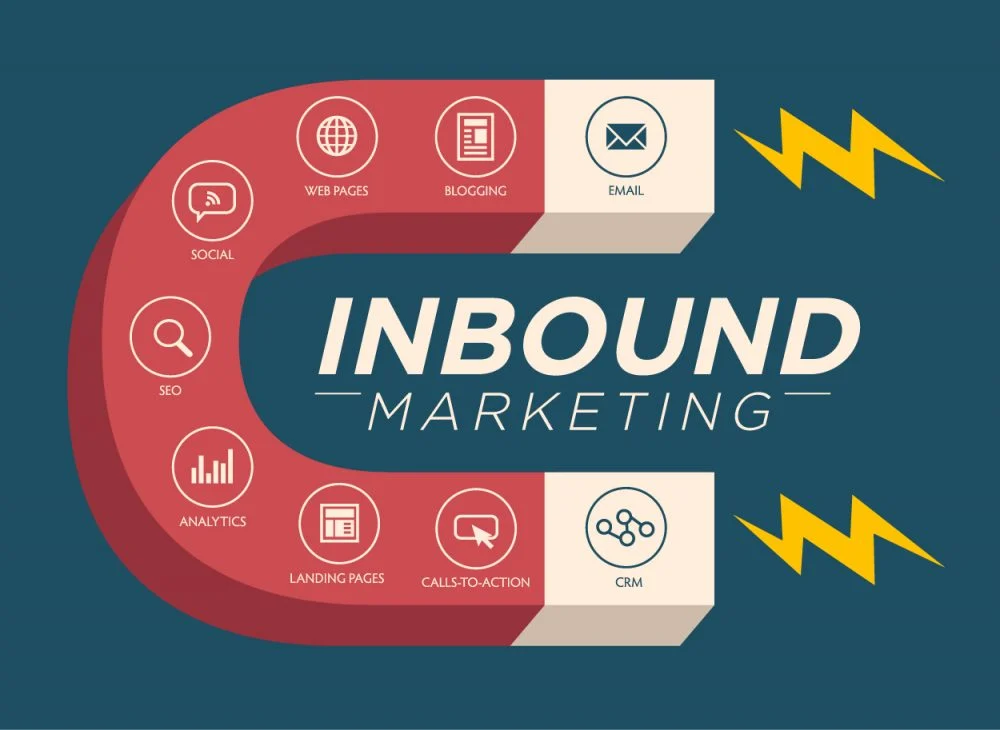
But it’s actually a full-stack content engine that includes:
- SEO + AI-search optimisation
- Deep keyword and topic research
- Authority-driven articles and guides
- Video explainers and social discovery content
- Email nurturing sequences
- Landing pages structured for search + AI extraction
- Transparent analytics and conversion measurement
The brands that win in 2026 are not the loudest, they are the most useful.
Why Inbound Marketing Is Still Winning Today
Inbound works better today because digital ecosystems such as AI search, mobile behaviour, social discovery, now reward expertise, trust, and clarity over pure advertising spend.
Here’s the current landscape in four data points:
1. The global inbound marketing services market was projected to reach US$12.9B in 2025
2. Digital adoption is mainstream: 70% of businesses in emerging markets now use digital marketing
3. Yet only 21% of Singapore marketers fully utilise analytics, a massive performance gap
4. The digital economy already accounts for 17.7% of Singapore’s GDP
Inbound Marketing vs Performance Marketing: How They Work Together
Inbound marketing and performance marketing are often framed as opposites. In reality, the highest-performing teams treat them as complementary systems, not competing philosophies.
Performance marketing excels at speed.
Paid media can generate immediate visibility, test offers quickly, and scale demand once messaging is proven.
But it struggles with trust, depth, and long-term efficiency when used alone.
Inbound marketing excels at earning attention.
It builds authority, educates buyers, and reduces friction across longer decision journeys. It compounds over time and lowers acquisition costs, but it is rarely instant.
The mistake many organisations make is choosing one instead of designing the relationship between the two.
Inbound strengthens performance by:
- Improving traffic quality to paid landing pages
- Reducing bounce rates through better pre-education
- Creating assets that ads can point to, not just offers
- Shortening sales cycles by answering objections upfront
Performance strengthens inbound by:
- Accelerating early visibility for high-value content
- Testing headlines, angles, and positioning before scaling organically
- Supporting launches while inbound assets mature
Inbound is the system that builds trust and authority.
Performance is the amplifier that scales what already works.
When inbound is weak, paid spend becomes expensive and fragile. When inbound is strong, performance becomes more efficient and predictable.
The goal is not traffic. The goal is informed demand.
Why these numbers matter
Inbound performs best in markets where:
- People research before buying
- Digital search behavior is high
- Trust is a major buying factor
- Expertise beats advertising noise
Inbound succeeds because it rewards:
- Clarity
- Depth
- Authority
- Consistency
- Authentic problem-solving
Not massive budgets.
Not interruption advertising.
And while algorithms matter, they are not the strategy.
Inbound performs best when content is built for people first, and structured in ways algorithms and AI systems can understand and surface.
The difference is subtle but important: inbound adapts to algorithms instead of chasing them.
How Inbound Marketing Works
Inbound runs on a simple but powerful loop:
Step 1 — Identify intent
What is your customer trying to solve, compare, or learn?
Step 2 — Publish the best answer online
This includes:
- Search-optimised articles
- How-to guides
- Category explainers
- Comparison pieces
- Pricing breakdowns
- Case studies
- Short videos (link to video production services page)
- Downloadable tools / templates
Step 3 — Capture interest
With:
- Lead magnets
- Landing pages
- Simple forms
- Resource downloads
- Newsletter opt-ins
Step 4 — Nurture the relationship
Email and content automation push customers gently toward the next step.
Step 5 — Convert when they’re ready
The shift is subtle but crucial:
Inbound shortens the sales cycle because customers educate themselves with your content.
Step 6 — Measure and refine
The highest-performing inbound teams improve:
- Topics
- Messaging
- Conversion paths
- Content structure
- Search visibility
Inbound is not a campaign. It is an engine.
The Core Components of High-Performing Inbound Marketing
Every inbound program today relies on six key components:
A) Search-ready content (SEO + AI Search)
Content now needs to be optimised not only for Google, but for:
- Google SGE (AI Overviews)
- ChatGPT Browse
- Perplexity
- Bing Chat
- Other LLM-powered search engines
This requires:
- Clear structure
- Headings that match search intent
- Step-by-step breakdowns
- Credible outbound citations
- Definitions and explanations AI can extract
SEO has not died; it has evolved.
B) Authority-driven writing
Your content must demonstrate:
- Domain expertise
- Data and prooF
- Clear opinions
- Experience
AI tools can create text, but only authority earns ranking, trust, and conversions.
C) Conversion-optimised landing pages
Landing pages work because they:
- Are specific
- Match searcher intent
- Load fast
- Offer a valuable next step (not a hard sell)
- Include clear, scannable layout
D) Email sequences that build trust
Even in 2026, email remains one of the highest-ROI inbound tools.
Your inbound system must include:
- Welcome sequences
- Educational drips
- Case-study highlights
- Product walkthroughs
- Timely offers
E) Analytics and measurement
With only 21% of marketers fully utilising analytics, simply measuring the basics already puts most brands ahead.
F) Video + social as discovery channels
Short videos (YouTube Shorts, TikTok, IG Reels, LinkedIn clips) drive awareness. Inbound converts it.
Topical Authority and Content Clustering: How Inbound Marketing Compounds
Inbound marketing no longer rewards isolated content. It rewards topical authority.
Topical authority means demonstrating depth, consistency, and expertise across an entire subject area, not just ranking for individual keywords.
Search engines and AI systems now look for sources that repeatedly publish clear, credible answers within a defined domain.
This is why random blog posts fail to compound.
High-performing inbound programs organise content into clusters:
- A core pillar page that defines the topic clearly
- Supporting articles that answer specific sub-questions
- Case studies, videos, and tools that reinforce credibility
- Internal links that connect everything logically
Over time, this structure signals expertise to both humans and machines.
AI-powered search engines are more likely to surface content from brands that cover topics comprehensively rather than superficially.
For audiences, topical authority builds trust through familiarity.
For search systems, it establishes relevance at scale.
Inbound success comes from being the best source on a topic, not from publishing the most posts.
What’s Changed in Inbound Marketing (and what hasn’t)
What has changed:
- AI search is now a primary source of discovery
- Topical authority beats domain authority
- Customers expect transparency (pricing, process, proof)
- Content must be structured for AI extraction
What remains the same:
- People still search when they need something
- Trust still drives buying decisions
- Useful content still outperforms sales copy
- Consistency still compounds over time
Inbound marketing didn’t get replaced. It sharpened.
How AI Has Transformed Inbound
AI hasn’t replaced inbound, but has in fact accelerated every part of it:
AI handles:
- Keyword and topic research
- Drafting outlines
- Summarising complex information
- Building briefs
- Performing competitor SERP scans
- Automating customer segmentation
- Lead scoring
- Predictive scoring
- Report generation
Humans must still handle:
- Strategy
- Messaging
- Voice
- Insight
- Storytelling
- Accuracy
- Proof
- Final authority
AI scales the work, but humans give it meaning.
What High-ROI Inbound Marketing Looks Like
- It’s clear
Your content is simple, helpful, direct.
- It’s consistent
You publish weekly or bi-weekly, not daily noise.
- It’s customer-centred
Every piece answers real user questions.
- It’s structured
So search engines and AI models can extract it.
- It’s measurable
Dashboards track performance, not feelings.
- It’s holistic
Articles, videos, social posts, email, and landing pages all ladder up to the same strategy.
Inbound Marketing for Complex, High-Consideration B2B Decisions
Inbound marketing is often associated with fast-moving SaaS or low-friction purchases.
In reality, it delivers its greatest value in complex, high-consideration B2B environments.
When decisions involve multiple stakeholders, long timelines, and real risk, buyers need more than brand awareness. They need clarity.
Inbound supports these decisions by acting as pre-sales education:
- Explaining processes before sales conversations begin
- Demonstrating expertise through depth, not claims
- Reducing perceived risk with proof and transparency
- Aligning stakeholders around shared understanding
In these contexts, inbound content is rarely about conversion in a single session. Its job is to:
- Equip buyers with language to justify decisions internally
- Answer unspoken objections before they surface
- Build confidence over time through repeated exposure
This is why case studies, process explainers, and detailed guides consistently outperform short-form promotional content in B2B inbound systems.
For complex decisions, inbound doesn’t replace sales.
It makes sales easier.
How To Start (or fix) Your Inbound Program
A practical 7-step checklist:
1. Identify your top 20 customer questions
These become your first content pillars.
2. Build 20 “answers” as high-quality pages (link to our Insights page)
Start with inbound staples:
- “What is…?” explainers
- Comparison pages
- Pricing guides
- Buyer’s checklists
- Case studies
- Process breakdowns
3. Create one valuable lead magnet
A checklist, template, or guide.
4. Build or update your landing pages
One clear CTA per page.
5. Set up basic tracking
GA4
Search Console
A CRM (even a simple one)
6. Launch a nurture sequence
Deliver 4–6 helpful emails based on the content they downloaded.
7. Refresh quarterly
Inbound compounds through iteration.
Why Inbound Marketing Fails (and how to avoid the common traps)
Inbound marketing often fails not because the strategy is flawed, but because it is misunderstood or under-resourced.
The most common failure patterns are predictable.
Many teams publish content without intent research, creating material that is well-written but misaligned with what audiences are actually searching for.
Others treat inbound as a volume game, producing frequent posts with no structure, no internal linking, and no clear conversion path.
Some rely too heavily on AI-generated content, sacrificing originality, accuracy, and authority in the process.
Measurement is another frequent weak point. When teams track only traffic or rankings, they lose sight of lead quality, conversion paths, and revenue influence.
Finally, inbound breaks when it is treated as a side project. Consistency, iteration, and ownership matter more than tools or tactics.
Successful inbound programs avoid these traps by:
- Anchoring every piece of content to real customer questions
- Designing content as connected systems, not one-offs
- Pairing AI efficiency with human judgement and expertise
- Measuring outcomes, not vanity metrics
- Committing to long-term improvement rather than short-term spikes
Inbound works when it is treated as a system — not an experiment.
How to Measure Inbound Marketing Success
Success isn’t ranking for random keywords. It’s progress in these core metrics:
Traffic quality (not just quantity)
Are visitors aligned with your offering?
Organic conversions
Are your landing pages converting?
Lead quality
Are leads entering sales with intent?
Content-assisted revenue
Did content influence a deal?
Time to conversion
Is inbound shortening the sales cycle?
Email performance
Are customers engaging with your nurture system?
Inbound is successful when it makes your business easier to find,and easier to trust.
Inbound Marketing As A Long-Term Business Asset
The biggest mindset shift organisations must make in 2026 is this:
Inbound marketing is not content production. It is asset building.
Every high-quality inbound asset you publish, be it a guide, explainer, case study, or video, continues working long after launch.
It attracts new audiences, educates buyers, supports sales conversations, and compounds authority over time.
Unlike paid campaigns, inbound assets do not stop performing when the budget stops. They improve as:
- Search visibility increases
- Internal links strengthen
- AI models reference your content
- Audiences return to trusted sources
Strong inbound programs behave more like infrastructure than marketing tactics. They reduce dependency on constant ad spend, shorten sales cycles, and create a library of proof that supports every future campaign.
This is why inbound rewards patience and discipline. Early results may feel slower than paid channels, but over time, inbound delivers:
- Lower cost per lead
- Higher-quality conversations
- Greater trust at first touch
- Sustainable, defensible visibility
In a landscape where algorithms shift and platforms change, inbound assets remain discoverable because they are built on something more stable: genuine usefulness.
The brands that win long-term are not those who publish the most content, but those who invest in the most valuable answers — and keep improving them.
Inbound is not fast growth.
It is durable growth.
Conclusion: Inbound Is Still A Long Game, and It Still Wins
Inbound marketing isn’t a trend.
It isn’t tied to Google updates or AI waves.
It’s built on something more durable:
People want clear answers from brands they trust.
That truth is stronger than ever.
Search has changed.
AI has become far more potent .
And consumer expectations have dramatically risen alongside.
But the brands that teach, clarify, and guide still outperform those that interrupt, escalate, or shout.
Inbound works because it reflects how people actually make decisions.
And in the long game, the brands that help the most always win.
FAQ
What is inbound marketing?
Inbound marketing is a strategy where brands attract customers by publishing helpful content—not interruptive ads. It focuses on answering user questions, building trust, and guiding buyers through their decision-making journey.
What’s the difference between inbound and outbound marketing?
Outbound marketing pushes messages out (ads, cold outreach, promotions).
Inbound attracts customers in by publishing helpful content that solves real problems, earns trust, and builds long-term authority.
Why is inbound marketing effective?
Inbound works because it aligns with real buying behaviour. People research before they buy. Brands that provide clear, useful answers earn trust, authority, and long-term visibility.
What type of content drives inbound marketing results?
High-performing inbound systems typically use:
- Search-optimised articles
- How-to guides
- Video explainers
- Case studies
- Checklists, templates, and tools
- Landing pages and email sequences
How long does inbound marketing take to show results?
Most organisations see meaningful traction within 3–6 months, with compounding results over 12 months. Inbound is a long-term engine, not a short campaign.
What metrics should I track for inbound marketing success?
Key metrics include:
- Organic traffic quality
- Conversions and leads
- Time to conversion
- Email engagement
- Content-assisted revenue
- Ranking improvements
- User intent alignment