Redefining Authorship in the Age of AI Writing Tools
Who owns the intellectual property if you’re using AI to help write that article?
- SHARE ON:


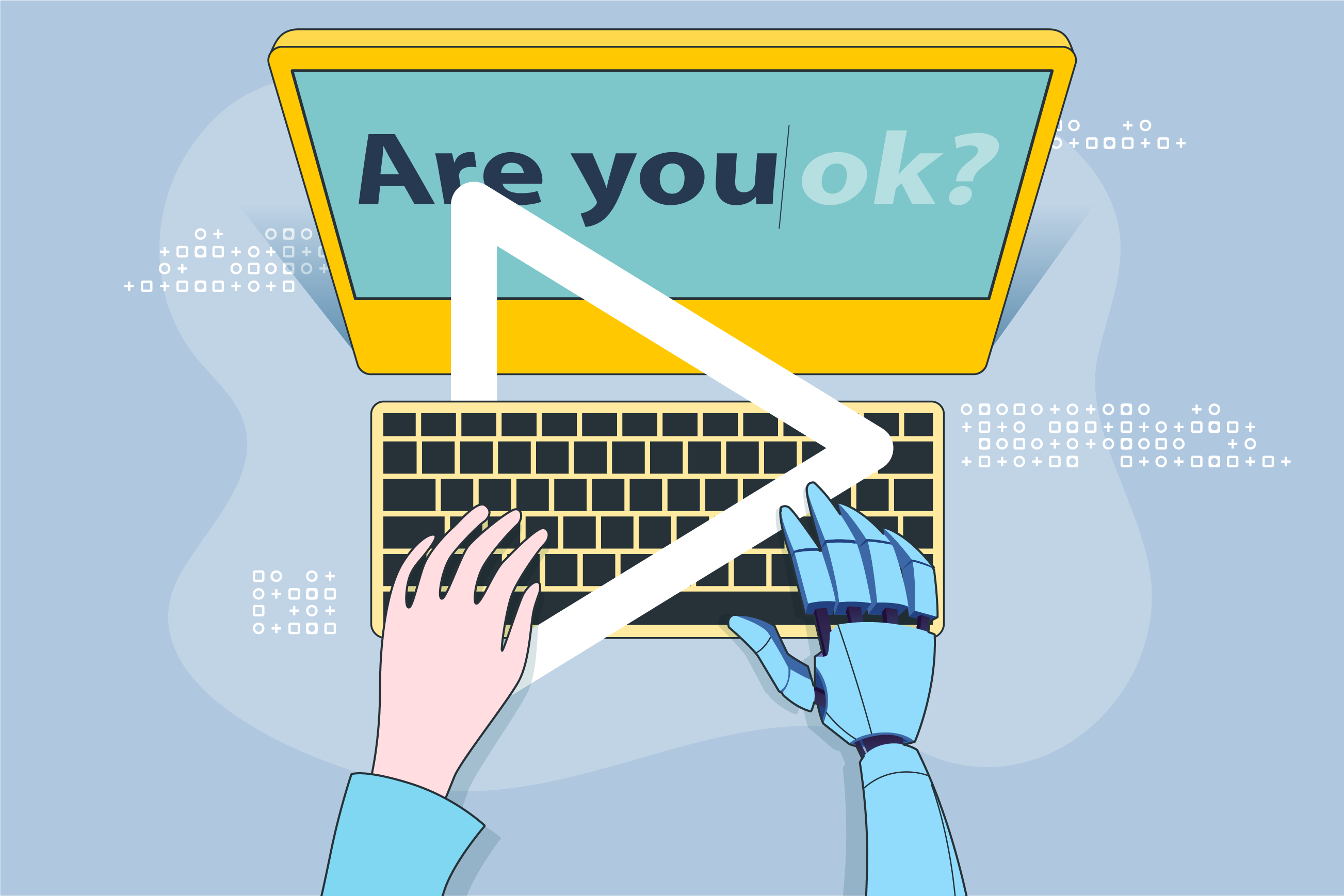
AI writing tools are now embedded across the entire content creation process, from ideation and drafting to editing and repurposing.
For writers and organisations, this raises a practical question, not just a philosophical one:
If AI helps write the content, who is responsible for it?
This guide explains how authorship is changing, what still stays human, and how to use AI writing tools effectively without losing credibility, voice, or accountability.
How AI writing tools have changed the writing process
Early AI writing tools focused on surface-level assistance: grammar checks, sentence suggestions, or basic rewrites. Their role was clearly supportive.
Today, AI tools can:
- Generate full drafts from briefs
- Propose structure and narrative flow
- Adapt tone for different audiences
- Repurpose content across formats
- Support editing, summarisation, and translation
Most importantly, AI is no longer used at a single moment. It now supports entire writing workflows.
This shift is why authorship feels blurred, not because humans have lost control, but because AI is present at more stages of the process.
Who owns the content when AI is involved?
AI writing tools do not have intent, accountability, or ownership. They do not decide what should be written, why it matters, or whether it is appropriate to publish.
Humans do.
Authorship still involves:
- Defining the purpose of the content
- Choosing what to include or exclude
- Evaluating accuracy and relevance
- Shaping tone, nuance, and positioning
- Taking responsibility for the final output
Even when AI generates large portions of text, the author remains the person or organisation that directs the work and publishes it.
How teams are actually using AI writing tools today
AI writing has matured quickly in the last year. What’s changed isn’t just output quality, it’s how professional teams are using AI within real workflows. Understanding these shifts is essential if AI is going to improve writing rather than dilute it.
Why different writing tasks need different AI approaches
One of the biggest mistakes teams make is using AI the same way for every writing task.
In practice, writing involves three different kinds of work:
- Thinking work: deciding what to say
- Drafting work: turning ideas into language
- Polishing work: improving clarity, tone, and structure
AI is most effective when used differently at each stage. It can help explore angles early on, accelerate rough drafts once ideas are clear, and refine language later. What it cannot reliably do is replace thinking or judgement.
This is why asking AI to “write the whole article” often produces content that feels generic or unfocused.
Why briefing matters more than prompting
As AI tools have matured, results depend less on clever prompts and more on clear briefs.
The most effective writers treat AI like a junior collaborator. Vague instructions produce vague output. Clear context produces usable drafts.
Strong briefs usually include:
- The audience and objective
- The desired tone or positioning
- What the content should avoid
- Any sensitivities or constraints
Writers who get the best results rarely rely on one perfect prompt. They brief, review, refine, and iterate: maintaining authorship through direction and decision-making.
What AI is best (and worst) at when writing
AI is particularly strong at:
- Rewriting for clarity
- Simplifying complex language
- Adapting tone for different audiences
- Restructuring messy drafts
It is far weaker at:
- Original insight
- Strategic point of view
- Lived experience
- Context-specific judgement
As a result, many writers now start with rough notes or early drafts and use AI to improve them. This keeps authorship human while still benefiting from speed and fluency.
Using AI as a thinking partner, not just a writing tool
Beyond drafting, AI is increasingly used to improve the quality of thinking.
Writers use it to:
- Stress-test arguments
- Generate counterpoints
- Identify gaps or assumptions
- Explore alternative perspectives
This doesn’t outsource authorship. It strengthens it.
AI helps challenge ideas, but humans decide which ones stand.
The risk of sameness in AI-generated writing
As more people use the same AI tools, a new problem has emerged: content that is technically sound but indistinguishable.
Common signs include:
- Familiar phrasing
- Predictable structures
- Neutral, overly safe tone
Avoiding sameness requires more human intervention, not less.
Writers increasingly edit AI outputs aggressively, inject perspective, and deliberately break formulaic patterns.
Originality doesn’t come from avoiding AI. It comes from not letting AI have the final say.
When not to use AI for writing
Responsible use also means knowing when AI is not appropriate.
Many teams avoid AI for:
- Sensitive leadership communications
- Crisis or reputational messaging
- Highly personal viewpoints
- First drafts of high-stakes thought leadership
In these cases, the risk of misalignment outweighs the efficiency gains. Knowing when not to use AI is a sign of editorial maturity.
What’s new in AI writing
1. AI writing is now model-specific, not tool-agnostic
Different AI models behave very differently for writing.
Writers are no longer asking, “Should we use AI?”
They’re asking, “Which model is right for this task?”
Some models are better at:
- Long-form reasoning and structured explanations
- Technical or policy-heavy writing
- Consistent, neutral business tone
Others perform better at:
- Marketing copy
- Conversational language
- Short-form or headline-driven content
As a result, experienced writers often switch models mid-workflow: using one to outline or reason through complexity, and another to refine tone or readability.
This reinforces authorship rather than undermining it. Model selection itself becomes an editorial decision. Humans are responsible for evaluating outputs, spotting weaknesses, and deciding which version best reflects their intent.
There is no single “best” AI writing model, only models that are more or less suitable for specific writing goals.
2. Multimodal writing workflows are now the norm
Writing with AI is no longer text-only.
In many organisations, AI is now used to transform content across formats, not just generate copy from scratch. Common workflows include:
- Turning video or podcast transcripts into articles
- Converting presentations into whitepapers, or the other way around
- Expanding interview notes into thought leadership
- Repurposing event discussions into editorial content
This is especially relevant in content ecosystems where insights originate verbally: workshops, leadership interviews, panels, or filmed content.
In these cases, AI isn’t the source of the ideas. Humans are.
AI acts as a bridge between formats, helping translate spoken or visual material into written form.
Authorship still belongs to the original thinker and the editorial team shaping the output.
The risk lies in losing nuance during transformation, which is why human review is critical.
AI can accelerate the process, but it cannot judge which moments matter most or what should remain unsaid.
3. The rise of AI editorial workflows (not just tools)
As AI adoption has matured, leading teams have shifted focus from tools to workflows.
Rather than ad-hoc experimentation, organisations are formalising:
- When AI can be used
- How outputs are reviewed
- Who approves final content
- Where accountability sits
This often includes:
- Clear AI usage guidelines
- Mandatory human review stages
- Defined ownership for accuracy and tone
- Escalation paths for sensitive content
Importantly, governance does not mean slowing down. Well-designed workflows allow teams to scale content production without losing consistency or credibility.
In this environment, authorship becomes process-based. It’s not about who typed the words, but who approved them, who validated them, and who stands behind them publicly.
4. AI writing and AI search have converged
Another major shift is how content is now discovered and consumed.
Content today is read not just by humans and search engines, but also by AI systems that summarise, extract, and repackage information. This includes generative search experiences, AI assistants, and discovery platforms.
As a result, writing is increasingly:
- Parsed for meaning
- Reduced to key points
- Quoted out of context
This changes what effective writing looks like.
Clarity now matters more than cleverness. Structure matters more than stylistic flourish.
Clear explanations, strong subheads, and explicit reasoning help both humans and AI systems understand content accurately.
Authorship in this environment includes intent-setting: ensuring the content can be interpreted correctly even when it’s summarised or partially extracted by machines.
Ironically, this makes human judgement even more important.
AI systems may surface the content, but humans must ensure it says what it should say.
5. Failure modes teams often miss after adopting AI
As AI becomes embedded in writing workflows, teams are encountering second-order problems that aren’t obvious at first.
Common failure modes include:
- Producing more content without stronger thinking
- Faster turnaround, weaker point of view
- Inconsistent tone across teams using AI differently
- Gradual loss of institutional voice
These issues don’t come from AI itself. They come from unclear authorship.
When no one clearly owns direction, review, or final approval, AI amplifies the problem.
Content may be fluent, but lacks coherence or conviction.
Mature teams address this by clarifying who owns:
- Strategy
- Editorial judgement
- Final sign-off
AI works best when it accelerates good systems, not when it replaces them.
What mature teams do differently with AI writing
As AI writing tools become standard, the real differentiator is no longer whether teams use them, but how intentionally they are integrated into brand, knowledge, and quality systems.
This is where most organisations either level up, or quietly erode their content standards.
AI writing and brand governance
One of the least discussed challenges in AI-assisted writing is brand governance.
AI can imitate tone, but it does not understand brand history, long-term positioning, or reputational nuance.
Without guardrails, different teams using AI independently can produce content that is individually acceptable, but collectively inconsistent.
Mature teams address this by:
- Defining brand voice principles that AI outputs must follow
- Using exemplar content as reference material
- Establishing editorial review layers for AI-assisted drafts
- Clearly separating “drafting speed” from “brand approval”
In practice, this means AI accelerates the first 70% of the work, while humans remain responsible for the final 30%.
That’s the part that determines whether content feels credible, confident, and unmistakably on-brand.
Authorship here is not about writing every sentence.
It’s about protecting the brand’s voice over time.
Training AI on proprietary knowledge (without losing control)
Another major shift is how teams use AI with their own internal knowledge.
Rather than relying solely on general models, organisations increasingly:
- Feed AI internal documents, transcripts, or guidelines
- Use AI to summarise proprietary research
- Generate drafts grounded in internal expertise rather than generic sources
This can significantly improve relevance and accuracy, but it also introduces new responsibility.
Human oversight is critical because:
- Internal data may be outdated or incomplete
- Context may be lost when summarised
- Sensitive information may surface unintentionally
Responsible teams establish clear rules around:
- What internal materials AI can access
- What content must be manually reviewed
- What outputs can be published externally
In this model, AI becomes a knowledge accelerator, not a knowledge authority.
Authorship remains human because humans decide what internal insight is ready to be shared, and what is not.
Measuring whether AI is actually improving writing
Perhaps the most overlooked question in AI-assisted writing is also the most important:
Is this actually making the content better?
Speed and volume are easy to measure. Quality is not.
Mature teams look beyond productivity metrics and assess:
- Clarity of argument
- Strength of point of view
- Consistency of tone
- Audience engagement and trust signals
They also ask:
- Are we publishing faster but saying less?
- Are we generating more content without stronger insight?
- Has our voice become flatter over time?
AI should raise the bar for writing, not lower it.
If content becomes easier to produce but harder to distinguish, something is wrong.
Not with the tool, but with how it’s being used.
This is where authorship becomes a quality control mechanism.
Someone must still be accountable for whether the writing is worth reading at all.
Why authorship matters more in B2B content
In B2B contexts, authorship directly affects trust.
Business audiences rely on content to make decisions involving investment, compliance, and long-term partnerships.
AI can help scale content production, but it cannot replace subject-matter expertise or accountability for claims.
This is why authorship in B2B writing often takes the form of editorial ownership, where there’s someone clearly standing behind the ideas.
Editorial control, brand voice, and accountability
AI can mimic tone, but it does not understand brand identity. It does not know which boundaries matter or which messages align with long-term positioning.
Maintaining a consistent voice requires clear guidelines and human review. For most organisations, AI output should remain draft material: refined and approved by people who understand the brand.
Legal responsibility and ethical use of AI writing tools
AI cannot hold copyright or be recognised as an author. Responsibility rests with the human or organisation that publishes the content.
This means humans remain accountable for:
- Accuracy
- Defamation
- Misrepresentation
- Ethical standards
Responsible use involves fact-checking, avoiding unverified claims, and setting internal guidelines. Ethics in AI writing isn’t about avoiding technology; it’s about using it deliberately.
All of these changes point to a broader shift in the definition of what good writing is.
Why this matters for the future of writing
As AI writing tools continue to improve, fluency will become a baseline expectation. What will matter instead is:
- Judgement
- Synthesis
- Editorial courage
- Clear accountability
AI can help teams move faster. Only humans can decide where they are going.
Why these changes reinforce (not remove) authorship
Taken together, these shifts point to the same conclusion: AI has made authorship more important, not less.
As tools become more powerful, responsibility concentrates around:
- Decision-making
- Evaluation
- Approval
- Accountability
The writer’s role expands from execution to orchestration.
From producing text to directing systems.
From typing to thinking.
Summary: How to use AI writing tools without losing authorship
AI writing tools have changed how content is produced, but not who is responsible for it.
Authorship remains human because humans:
- Define intent
- Apply judgement
- Control what gets published
- Accept accountability
The most effective writing today is human-led, AI-assisted, and this combines efficiency with expertise, and scale with credibility.
FAQ
Is AI considered an author?
No. AI cannot take responsibility or hold copyright. Authorship remains human.
Should AI-generated content be disclosed?
In regulated or academic contexts, yes. In marketing, transparency and accountability still matter.
Can AI replace professional writers?
AI can support writers, but it cannot replace judgement, expertise, or responsibility.
What’s the biggest risk of AI writing tools?
Publishing content that sounds credible but is inaccurate, generic, or misaligned.
How should businesses use AI responsibly for writing?
By keeping humans in control of strategy, review, and final approval